
Types of Skateboard Ramps
The decision to make
Choose the kind of session first. Compare ramp shapes, obstacles and riding surfaces as separate decisions, then check the exact product against your space and build plan.
Half pipes, quarter pipes, skate bowls, banks, rails and boxes each create a different kind of session. Learn what the names mean and how each feature is skated, then compare the size, shape and building requirements for your setup. These choices matter whether you plan to build your own ramp, assemble a kit or commission a custom skatepark.
OC Ramps builds ramp kits and custom skateparks, so the choice is not limited to picking a shape from a catalog. Start with the skating you want to do. This guide will help you narrow the options before you compare OC Ramps kits or explore a layout designed around your site.
Start with the skating
| Decision | How to use it |
|---|---|
| Back-and-forth transition riding | Compare half pipes and mini ramps. Check both the complete footprint and the shape between walls. |
| One transition or a new feature in an existing line | Compare quarter pipes. Plan the approach and return, not just the ramp footprint. |
| Grinds, slides or manuals | Compare rails and boxes and ledges. Their edges and platforms create different options; leave usable approach and roll-away space. |
| Launches or riding a straight incline | Explore kickers and banks below. Match the feature to the intended direction of travel and landing or exit area. |
| Flowing turns and connected lines | Explore bowls and custom layouts below. Their connected geometry and site requirements deserve a project-specific plan. |
The right ramp is not automatically the tallest one. Start with what the rider wants to practice, the space available and how much building and care the setup can realistically take.
Use the categories below to narrow the field. Then confirm the exact assembled dimensions, surface, included parts and current availability on the product page.

Half pipes
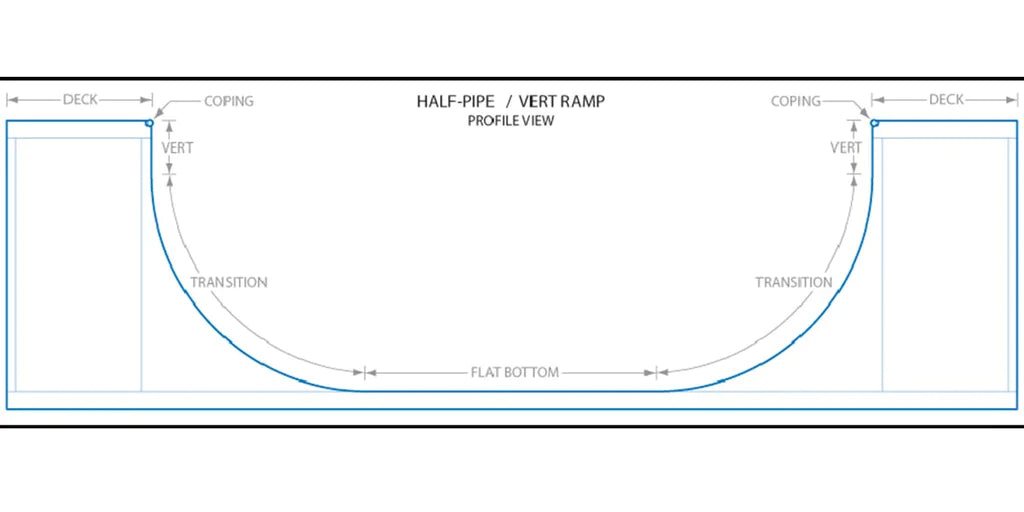
A half pipe places two transitions across a flat bottom so a rider can move back and forth without resetting after every hit. Mini ramp is the common name for a smaller half-pipe setup, but the exact dimensions matter more than the label.
Check the full length, width, height, deck depth and transition information before choosing. Two separate quarter pipes do not automatically create the same setup as a purpose-designed half pipe.
Shop Half Pipes and Mini Ramps

Mini ramps
Mini ramp is commonly used for a smaller half-pipe setup, although the term also appears in broader descriptions of ramps without a vertical section. It is a category label, not a fixed height specification or rider rating.
Mini ramps can support repeated transition practice and different kinds of tricks. Compare the exact height, transition, width and flat bottom with the rider’s goals. A smaller ramp does not remove the need to plan space, access and supervision where appropriate.
Use the Half Pipes and Mini Ramps collection to compare actual configurations. Do not assume two products ride alike simply because both are called mini ramps.

Quarter pipes
A quarter pipe gives you one transition and one deck. It can work as a standalone feature, a return point in a line or one side of a larger setup when the exact products are designed to work together.
Width affects the room available across the face and platform. Height and transition shape affect the ride, so compare the complete specifications instead of choosing from one dimension.

Skate bowls: linked turns and flowing lines
A skate bowl joins curved transitions with corners so you can carve around the layout, pump through turns and connect lines. A half pipe primarily sends you back and forth between two sides; a bowl opens up turning lines around the park. Choose the riding experience first, then plan the shape around the available site.
For a backyard skate bowl, compare the depth, transition, corner shape, decks and entry points as one design. A kidney-shaped bowl and an oval layout create different lines. The footprint also needs room for access and the build itself, not just the riding surface. Use the Space and Fit guide to start measuring.
OC Ramps designs and builds custom wooden skate bowls. Our San Diego backyard bowl project shows how site access, shape, deck space and the riding surface come together in a real build. That project is an example, not a universal size or price.
Want flowing bowl lines in your own space? Explore Custom Builds and share your location, available area and the skating you have in mind.

Vert ramps
A vert ramp includes a section that reaches vertical above its curved transition. That vertical section distinguishes the shape; height alone does not prove that a ramp has vert.
Vert can appear in half pipes, quarter pipes and other transition layouts. Look at a complete drawing and riding demonstration to understand the feature and surrounding space. Do not treat a familiar rider’s performance on a large ramp as a promise about another model or your own setup.
For a layout outside the standard product configurations, explore Custom Builds and explain the intended riding, available site and access.
Banks, kickers and launch ramps
A bank uses a straight incline. Kickers and launch ramps direct the rider upward or across a gap, but those product names are not universal geometry standards. Use the product drawing and riding media to understand the exact shape.
These features can work well in a line because the rider approaches, uses the face and continues. They still need enough approach and roll-away for the intended use.
Shop Launch Ramps. Compare the specific face, landing plan and intended use before combining features.

Grind boxes and ledges
A grind box is a box-shaped obstacle with edges used for grinds and slides. You may also see names such as fun box or grinding box, but those labels do not guarantee the same shape or features.
Boxes and ledges can add a flat top for manuals as well as edges for grinds and slides. Check the usable top width, edge construction, length and height. The surface beside and beyond the obstacle also matters because the rider approaches and exits along the line.
Shop Grind Boxes and Ledges. Compare the top and edges as carefully as the overall size.

If manuals and ledge tricks are the priority, compare grind boxes and ledges first for their flat platforms and edges. A grind rail gives you a rail-focused obstacle, not the same manual platform.
Grind rails
A skate rail is a metal feature used for grinds and slides. Rails can be freestanding, attached to another obstacle or part of a built skatepark feature. These arrangements create different approaches and exits.
Compare the rail’s length, height, profile and support arrangement. A rail and a box can serve related trick goals, but a rail does not provide the same flat top. Check the complete base footprint as well as the grinding surface when measuring the available space.
Shop Skate Rails and use exact product information to compare the configurations.

Skatelite riding surfaces
Skatelite is a riding-surface choice, not a ramp geometry. The ramp underneath still determines the height, transition, width and layout. Keep the surface decision separate from choosing the kind of feature.
Check the exact surface product, sheet size, required quantity and installation requirements for the selected ramp. Compare current pricing for the complete configuration rather than using an old per-sheet price or a generic mini-ramp total.
Exposure and care requirements belong to the exact material and installation. Use Choose the Right Skate Ramp Surface before choosing the top layer, and follow the applicable product instructions.
Skate Paint and wood protection
Skate Paint is a coating option for applicable wooden ramp surfaces. Once you have chosen the ramp shape, consider how you will protect and maintain the wood. A coating and a riding-surface panel are different options, with their own preparation, installation and care requirements.
Check compatibility, preparation, application, drying and coverage instructions for the exact coating and substrate. Work out the required quantity from the area and product directions, including any treatment required for the complete setup.
Do not assume a coating makes the whole ramp waterproof or removes inspection and care. Compare Skate Paint products and continue to Ramp Care for the inspection and maintenance plan.
Masonite and hardboard
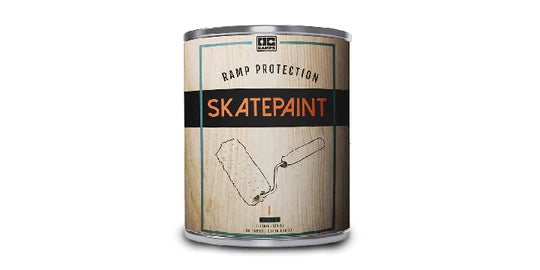
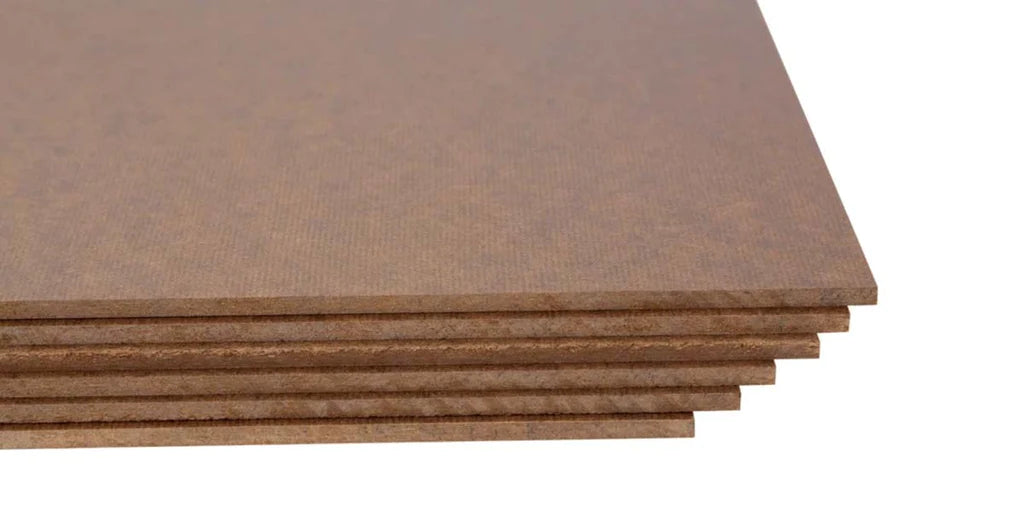
Masonite is a name you may encounter for hardboard used as a ramp’s riding layer. It is a surface topic, rather than a distinct ramp shape. The exact board specification matters when comparing materials.
Before selecting hardboard, check whether that material is suitable for the site’s moisture and exposure conditions. An indoor application does not establish outdoor suitability. Do not assume that adding a coating makes an unsuitable board appropriate for an exposed ramp.
Compare the material, installation and care requirements in the Riding Surfaces guide. Keep the surface choice tied to the actual site and product requirements.
Coping
Coping is the edge at the top of many quarter pipes and half pipes, used for grinds, stalls and other tricks. It is a component of the ramp, not a separate category of riding surface.
Check the selected model for the coping material, profile, connection and relationship to the deck and transition. Do not assume every feature has the same coping or that a substitute component will work because it looks similar.
For replacement or repair, identify the ramp and ask for the compatible part and fitting instructions. Use Ramp Shape to understand how the deck, transition and coping work together.

BMX, scooter and roller-skating ramps
These names describe who will ride the ramp, not a different ramp shape. A quarter pipe, mini ramp or bowl may be part of the conversation for several riding styles. Choose the type of session first, then confirm the exact product and configuration for the equipment you use.
Choosing a ramp for BMX
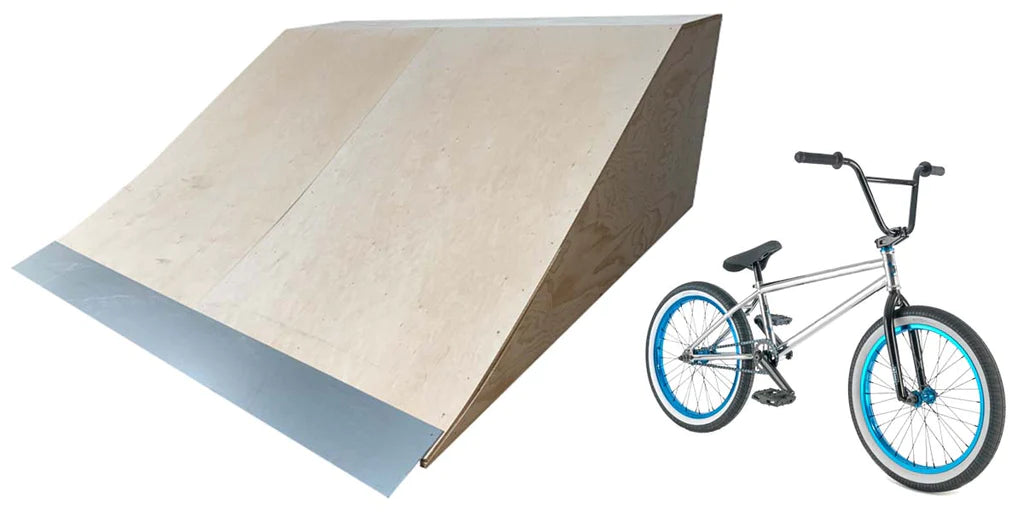
For BMX, start with the line you want to ride: a launch feature, a quarter pipe or a connected transition layout. Think beyond the ramp itself to the approach, landing or return path, and space to turn the bike.
Tell OC Ramps which bike and riding style the setup is for. A skateboarding photo does not establish bicycle compatibility, so confirm the model and configuration before ordering.
Choosing a ramp for scooter riding
Looking for scooter ramps? Narrow the search to stunt-scooter riding, rather than mobility or vehicle-loading ramps. Then compare the shapes above around your session: banks and launch features, a single quarter pipe, or a connected mini-ramp layout.
Share the scooter you ride, the tricks you want to practice and your available space with OC Ramps. We can help you compare the proposed setup; confirm suitability for the exact ramp rather than assuming every skateboard ramp is interchangeable.
Choosing ramps for roller skating
Roller skating on ramps brings another way to use transitions. If flowing around a bowl is the goal, compare connected corners and lines; if you want to work on one transition or travel back and forth, compare quarter-pipe and mini-ramp layouts.
Tell OC Ramps that you plan to use quad skates and describe the session you have in mind. The ramp shape, riding surface and your skate setup are separate decisions. Ask about the exact kit or explore a custom skatepark designed around the intended riders and site.
Talk with OC Ramps about your setup before choosing a model for BMX, scooter riding or roller skating.
Four checks before you choose a model
Once you know the category, make the decision with the whole setup in view:
- Fit: assembled footprint, approach, roll-away and access.
- Ride: exact geometry and the skating the rider wants to do.
- Build: what arrives, what is included and what assembly requires.
- Care: riding material, exposure to weather, maintenance and future repairs.
Use the Buyer Guides Hub when you still need to compare the planning decisions. Use Plan Your Skate Ramp Space and Fit when a location is already in mind.
Not sure which feature belongs in your setup? Tell OC Ramps what you want to practice, who will skate it and how much space you have. Ask about the differences between the models on your shortlist. If you want several features to work together in one park, explore custom skateparks rather than assuming separately purchased obstacles will form the layout you have in mind.

Questions buyers ask about ramp types
Tap or click a question to expand its answer.
What type of skate ramp should I buy first?
Start with the skating you want to do, not the biggest ramp you can afford. A box or rail suits a grind-and-slide session; a quarter pipe gives you one transition; a mini ramp supports repeated back-and-forth runs. Then check the space each needs to be used, not just stored. Compare OC Ramps kits and obstacles with your rider's interests and available area. You do not need a whole park to start with a useful feature.
Should I choose a quarter pipe or a mini ramp?
Choose around the session and layout. A quarter pipe needs a flat-ground approach and return path. A mini ramp connects two transitions, so you can ride back and forth within the structure, but its complete footprint and deck access still need room. If both appeal, sketch each layout before comparing prices. The Space and Fit guide helps you compare usable setups rather than two isolated product dimensions.
Are mini ramps only for beginner skaters?
No. A mini ramp is not a beginner-only product. What makes it interesting to a rider includes its transition, width and the tricks or lines they want to practice. A taller model is not automatically the better long-term choice. Compare the exact geometry in the Ramp Shape guide, and tell OC Ramps what the rider enjoys so the conversation starts with their goals rather than a broad skill label.
Can skateboard ramps also be used for BMX, scooters or roller skating?
The same broad shapes can be relevant, but that does not establish that every model suits every kind of equipment. Tell OC Ramps whether you ride a BMX bike, stunt scooter or quad skates, along with the feature and riding style you have in mind. Ask about the exact product and configuration before ordering. The approach, riding surface and room to turn or exit matter alongside the ramp itself.
Can OC Ramps build a backyard skate bowl?
Yes. OC Ramps designs and builds custom wooden skate bowls. Connected corners create carving lines that a standard back-and-forth half pipe does not provide. Start with the area you have, the kind of lines you want to skate and a working budget; you do not need a finished design to begin the conversation. Explore custom skateparks to discuss a bowl or a layout that combines several features.
Can I build up a skate setup one obstacle at a time?
Yes, if the first feature works on its own and leaves a useful place for later additions. Draw the approach and exit for each proposed obstacle so a future rail or quarter pipe does not interrupt the original line. Buying separate products does not mean they attach or form a matched structure. Use the budget guide to separate the first purchase from later additions, or discuss a custom layout when the features need to be designed together.